 By Editorial Team
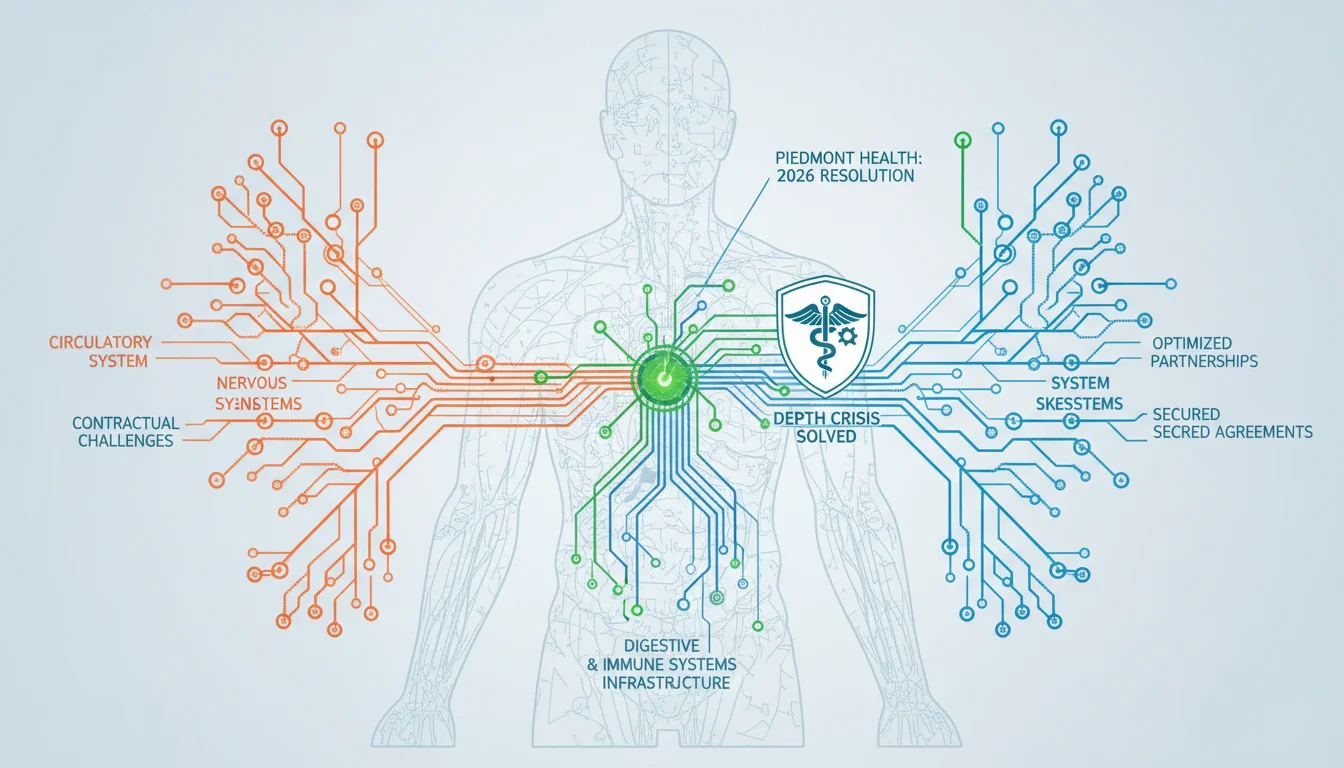
By 2026, healthcare operations had hit a new level of complexity, and for regional providers like Piedmont Health Systems, it was a breaking point. Dr. Anya Sharma, the COO, saw a dangerous trend: disputes with payers over authorizations and claims were spiraling, which was starting to hit patient care and the system’s bottom line. She realized the problem wasn’t just a few bad contract terms here and there. The real issue was a total lack of enterprise contract depth across their entire network. With hundreds of different agreements, how could they possibly know their true financial position without a microscopic view of every single obligation?
Key Takeaways
- A centralized contract repository system must be implemented, with the goal of cutting manual data entry for contract terms by 95% before the end of Q3 2026.
- Mandate the use of AI-powered contract analysis tools to automatically flag non-standard clauses in new agreements, requiring a 48-hour turnaround from receipt.
- Get cross-functional teams (legal, finance, clinical) in a room to review and align contract terms with how people actually work, targeting a 15% drop in claim denials within six months.
- Build a real-time dashboard that shows key performance indicators (KPIs) for contract compliance and financial performance across all major payer agreements.
Piedmont Health Systems serves communities all over Georgia, meaning it was operating under hundreds of separate contracts with insurance companies, government programs, and specialty vendors. Each one, often a dense brick of paper, was packed with intricate rules on reimbursement rates, service codes, prior authorization hoops, and how to fight over disagreements. Historically, they were managed in total chaos: legal kept master copies locked away, finance would try to pull out payment terms, and individual clinics might have their own (often outdated) cheat sheets. This siloed mess meant nobody had a complete, real-time grasp of what they’d actually signed. This made it impossible to ensure compliance, maximize revenue, or even make a decent financial forecast.
Dr. Sharma’s initial deep dive uncovered shocking wastes of time and money. A huge chunk of her administrative staff was spending their days manually digging through contracts to answer one-off questions, which caused delays in admitting patients and got more claims denied. “We were essentially flying blind,” Dr. Sharma admitted in an executive meeting in early 2026. “Our billing team was in a constant state of war with payers, fighting over interpretations of ‘medically necessary’ or weird coding rules, because the exact clause was buried on page 47 of a document nobody had ever really read.”
The challenge wasn’t just finding the right contract. It was pulling out the specific clauses that affected daily work and getting them to the right people. For example, a major insurer had just changed its pre-auth policy for some imaging services. The legal team saw the amendment, but that information never properly trickled down to the schedulers in every clinic. The result? A flood of denied claims that required costly appeals and, worse, delayed critical diagnostic tests for patients. That failure to communicate is the real cost of having no enterprise contract depth.
To fix this, Dr. Sharma pushed for a full Contract Lifecycle Management (CLM) system. Piedmont picked a platform known for its AI-driven analytics and ability to plug into their existing software. The goal was ambitious: digitize every single active contract, pull out all the critical data points, and make that information easy to find and use for everyone in the organization. The point wasn’t just to scan PDFs into a database. It was to use natural language processing (NLP) to actually parse the complex legal text and pull out key clauses, obligations, and dates.
A dedicated project team kicked off the implementation, starting with the painful job of migrating all the existing contracts. This was more than just uploading files. It meant tagging every document with metadata, payer name, contract type, effective dates, renewal clauses. The system also let them create standard templates for new contracts, which would force consistency and make future analysis much simpler. The first big win was the ability to search across every contract for specific terms. For instance, if you needed to know the reimbursement rate for CPT code 99213 (a standard office visit) across all commercial payers, the system could spit that out in seconds instead of the hours of manual work it used to take.
But the real power of the CLM, and the breakthrough in enterprise contract depth, came from its analytical engine. The platform could spot weird contractual deviations, flag upcoming renewal deadlines, and even highlight potential risks by comparing a new clause to a similar one that had caused problems in the past. For example, the system automatically pinged the finance department anytime a new contract proposed payment terms that were way off their benchmarks. This allowed them to negotiate proactively instead of cleaning up a mess after the fact. This is the difference between simple digitization and genuine contract depth, getting ahead of problems instead of just reacting to them.
The initial rollout covered their top five commercial payers, which brought in over 60% of Piedmont’s revenue. The impact was tangible within three months. The billing department saw a 10% reduction in initial claim denials tied to authorization mix-ups. This happened because front-line staff finally had immediate access to specific payer rules right from the CLM which cut down on errors made at the point of service. “Before, if a nurse had a question about a specific insurance plan’s authorization for a procedure, they’d have to call billing, who might then have to dig through physical files,” commented Sarah Chen, a supervisor in Piedmont’s patient access department. “Now, they can pull up the exact clause in minutes. It’s transformed our workflow.”
Beyond fixing daily operations, this new level of enterprise contract depth gave Dr. Sharma and her team a strategic edge they never had. During negotiations with a big national insurer for their 2027 contract, the CLM was indispensable. The system crunched historical performance data against the current contract terms, pinpointing specific clauses that always led to underpayments or administrative headaches. It highlighted, for example, that a particular clause on bundled payments for orthopedic procedures was consistently forcing Piedmont to eat costs, a detail that had been completely missed in previous manual reviews. Armed with hard data, the negotiation team was able to argue for better terms, leading to an estimated 5% bump in projected revenue from that single payer for the next year.
That kind of analysis was impossible before. It’s one thing to know you have a contract. It’s another to understand every single financial and operational consequence of it across the whole company. That is enterprise contract depth. It shifts you from being a librarian of documents to an active, intelligent manager of obligations and opportunities. The healthcare systems that invest in this granular understanding are the ones that will thrive in the messy reimbursement environment we have now. They can plug revenue leaks and cut compliance risks, which frees up resources to deliver better patient care instead of being tied up in administrative battles.
Of course, the project wasn’t without its headaches. There was initial resistance from some departments that were used to their old paper systems, and that required a serious change management effort. We’re talking lots of training sessions, not just on how to use the software, but on why this whole thing was necessary for Piedmont’s survival. Data quality was another hurdle. The initial migration had to be double- and triple-checked to make sure the data going in was accurate. But the benefits started showing up so quickly that they easily outweighed the initial pain.
By the fourth quarter of 2026, nearly all of Piedmont’s major payer contracts were in the CLM system. The legal department, which used to be a bottleneck for simple contract questions, was now working more strategically on high-level risk and new deals. Finance could produce revenue forecasts that were actually believable. And clinical departments had clear, immediate answers on authorization rules, meaning fewer delays for patients. The entire organization’s posture changed. Dr. Sharma said they went from being reactive, always putting out fires, to being proactive, and stopping the fires from starting in the first place.
The insights from their new enterprise contract depth quickly spread beyond just payer deals. Piedmont started using the same system for its vendor contracts, finding chances to save money and hold suppliers accountable to their service level agreements (SLAs). In one case, the system found that a medical supply vendor was constantly late with deliveries, triggering penalties in the contract that had never once been enforced. With that data in hand, Piedmont was able to renegotiate and get better service. The real strategic advantage comes from having this complete view of every single contractual obligation.
Piedmont’s journey shows a critical lesson for any complex organization, especially in healthcare: you need more than a filing cabinet full of contracts. Real financial health and organizational resilience come from achieving true enterprise contract depth. This requires a shift from basic document storage to an intelligent, data-driven analysis of every single clause, obligation, and opportunity buried in your agreements. It’s an investment in control that pays for itself by giving you a clear view of every dollar and every risk in your agreements.
What is enterprise contract depth in the context of healthcare?
Enterprise contract depth is a complete, granular understanding and active management of all contractual agreements across an entire health system. It means going past simple document storage to use data-driven insights from every clause, term, and obligation to make better financial, operational, and clinical decisions.
How does a lack of enterprise contract depth impact a health system’s finances?
A lack of enterprise contract depth leads to significant financial losses. You miss revenue opportunities, face higher claim denials, fail to collect payments, and overpay vendors. Without a tight grip on contract terms, health systems don’t bill correctly, miss appeal deadlines, and eat unnecessary costs, all of which directly damages the bottom line.
What technologies support achieving greater enterprise contract depth?
Contract Lifecycle Management (CLM) systems are the key technology. The best ones use Artificial Intelligence (AI) and Natural Language Processing (NLP) to automatically pull critical data out of contracts, identify important clauses, flag risks, and provide analytics that you can actually use.
How does improved enterprise contract depth benefit patient care?
Improved enterprise contract depth helps patient care by cutting the administrative red tape and financial uncertainty that delay treatment. When your staff can instantly confirm insurance coverage and authorization rules, patients get admitted and treated faster. A financially stable hospital can also invest more in the good stuff: clinical resources, better technology, and top-tier staff.
What are the initial steps to improve enterprise contract depth within an organization?
The first steps are to conduct a full audit of all your existing contracts, get them all into a single digital repository, and implement a CLM system. You also have to establish clear rules for how new contracts are created and reviewed, and then train people across legal, finance, and operations on the new way of doing things.
“Our “Out of Pocket, Out of Reach” series has been detailing the bleak state of health insurance that workers get through their employers.”


