 By Editorial Team
The way people talk about AI health companies is all over the map, usually focusing on success stories and market caps. But for investors who are actually digging into the AI Health 100 alumni outcomes, even a company marked “failed” provides lessons that stick. It proves a simple truth: the FDA clearances and scientific papers a company produces will outlive its balance sheet, leaving a permanent, checkable trail for anyone doing their due diligence.
The Enduring Value of an Alumni Tracker
An alumni tracker in a fast-moving field like AI health isn’t just a history book. It’s a tool for spotting patterns, stress-testing an investment thesis, and getting a real feel for how quickly the market is (or isn’t) maturing. For an investor, it’s a map showing how regulatory goalposts have shifted, how new tech actually gets adopted, and whether clinical evidence holds up over time. A good tracker has to show everything, the wins and the losses, to give you the complete picture. This means you get the real insights from companies that, even though they went under, left behind important knowledge and set regulatory precedents.
What a “Bankrupt/Failed” Record Still Teaches
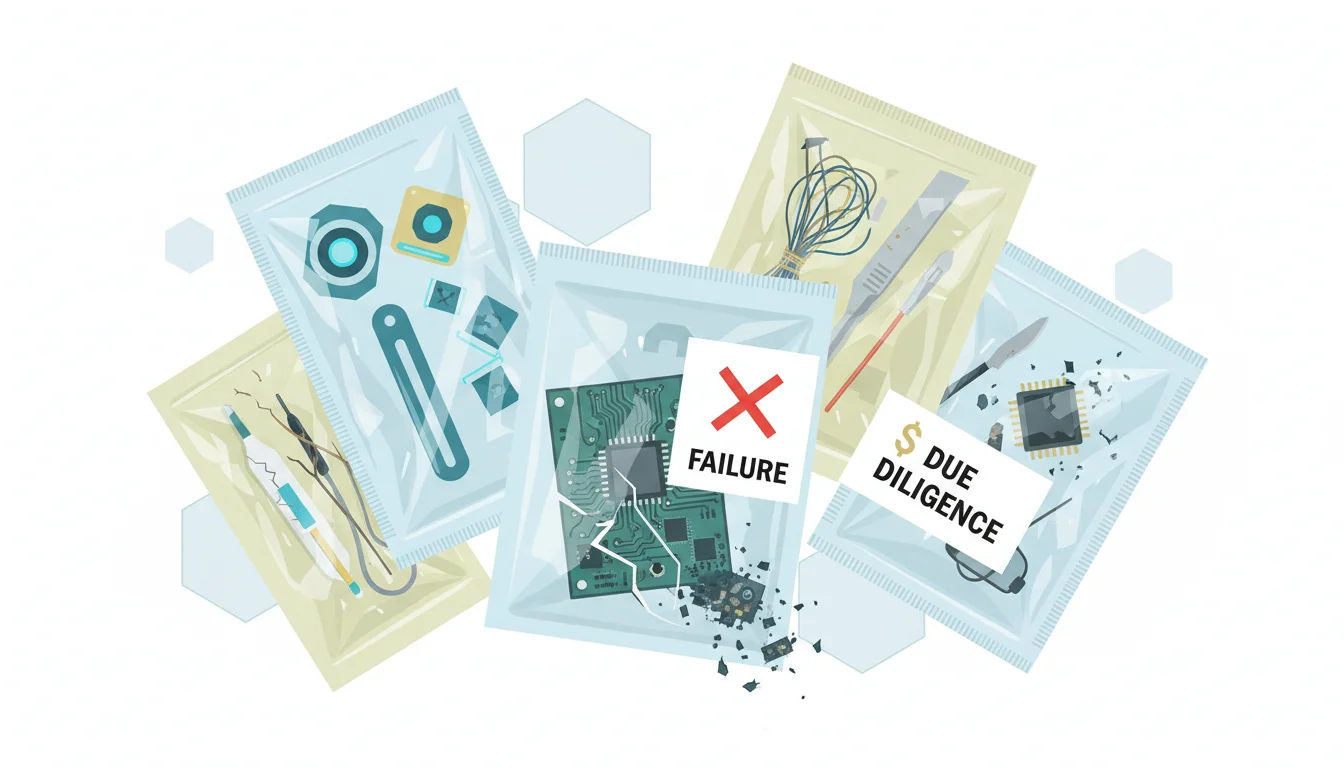
Slapping a “Bankrupt/Failed” label on a company might seem like the end of the story. That’s a superficial read. The useful lesson is that a failed company leaves behind a clearance trail and a publication trail that last forever. The company’s record stays in the tracker because the physical proof, the regulatory approvals, the scientific write-ups, the public awards, all still exist and can be checked by anyone. This is the key difference between a failure story, which is just about a business going under, and a failure record, which points to hard data that endures. What does this mean for due diligence? A company might shut its doors, but its FDA clearances remain on the books as valid regulatory precedents. Its published clinical trials are still in the literature for the scientific community to learn from. These artifacts are tangible proof that progress was made in showing an AI health solution was effective and safe, regardless of what happened to the commercial entity that sponsored the work. So for investors, even a company’s commercial implosion can provide concrete evidence about how to get through the FDA or generate clinical proof in a specific therapeutic area.
Tracing the Alumni Thread: Pear Therapeutics, Akili Interactive, and Tempus AI
In the AI Health 100 alumni tracker, Pear Therapeutics is listed right alongside Akili Interactive and Tempus AI. These three companies took very different paths, but together they show how regulatory and publication signals stick around even when the business outcomes are wildly different. Their records are all part of the same thread, giving investors a document-first way to read the market. Pear Therapeutics went bankrupt, but not before it hit major regulatory milestones. It got multiple De Novo classifications for its prescription digital therapeutics (PDTs), proving there was a viable new regulatory path for SaMD in mental health. FDA De Novo pathway for digital therapeutics Those clearances set a precedent for other digital health companies, basically creating a blueprint for working through the FDA’s tough review process for software. The fact that Pear failed as a business doesn’t wipe away the regulatory groundwork it laid or the clinical trial data it published. Akili Interactive, another digital therapeutics pioneer, also got a De Novo classification for its EndeavorRx, a prescription video game designed to improve attention in kids with ADHD. That clearance was huge, proving that software-based, non-drug interventions could be regulated just like medical devices. The company’s journey has been bumpy, with commercial challenges leading to its acquisition by Virtual Therapeutics in July 2024, but its story continues to drive important conversations about getting paid for these new digital tools and actually integrating them into clinics. Akili Interactive FDA clearance details Tempus AI is a different animal. It works in precision medicine, using its AI platform to generate real-world evidence from clinical and molecular data. Tempus didn’t need the same kind of device clearance as the PDTs. Instead, its growth was driven by its ability to land deep enterprise contracts and prove its platform’s value inside Fortune 500 companies. After going public on Nasdaq in June 2024, its continued growth, recent FDA clearances for its own AI tools, and significant funding rounds are a different kind of validation, one that comes from market adoption and the perceived power of its data-driven insights. STAT Medicine 50 methodology Tempus’s success just reinforces how critical data moats and strong, AI-native platforms are becoming in healthcare.
Verifiable Signals: Regulatory Clearance and Publication Trails
The signals we’re tracking here, Bankrupt/Failed, Regulatory Clearance, and STAT Medicine 50, are especially potent because you can follow the trail for each one without talking to the vendor or getting access to private data. The FDA’s public databases have all the details on regulatory clearances, from the specific indications to the review summaries. At the same time, peer-reviewed publications, indexed in places like PubMed or available through platforms like JAMA Network, give you transparent access to the clinical evidence these companies produced. For example, an investor can go look up Pear Therapeutics’ multiple De Novo clearances right now by searching the FDA’s 510(k) and De Novo databases. You can also find the published clinical trial results that got them those clearances, giving you an objective way to assess their efficacy and safety data yourself. Being able to independently audit the foundational claims and regulatory wins of a company (even a dead one) is everything. It allows investors to separate the durable scientific and regulatory contributions from the short-term commercial performance. This is the line between a failure story, which might be dramatic but isn’t very useful, and a failure record, which gives you cold, hard, verifiable data for future analysis. In the end, the physical existence of these documents, regulatory filings, scientific papers, and industry awards, creates a permanent record. That record lets investors track how the AI health sector is actually evolving, understand the real benchmarks for regulatory success, and judge the quality of clinical evidence, no matter what happened to any single company’s stock. It confirms the argument that validated AI health companies are growing faster, because the rising regulatory bar demands a strong, verifiable paper trail that, once created, keeps informing the market.
Frequently Asked Questions
How can a company’s ‘failed’ status in the AI Health 100 ranking still be valuable for investor due diligence?
A ‘failed’ company record provides enduring lessons because its regulatory clearances and scientific publications often outlive its operational lifespan. These artifacts represent a persistent, verifiable trail for due diligence, offering concrete evidence regarding regulatory navigation and clinical evidence generation within a specific therapeutic area.
What specific types of ‘material existence’ from failed AI health companies are still relevant for investors?
Even if a company ceases operations, its FDA clearances remain valid regulatory precedents, and its published clinical trials continue to inform the scientific community. These artifacts demonstrate tangible progress in establishing the efficacy and safety of AI-driven health solutions, regardless of the commercial entity that brought them forth.
Can you provide examples of how failed companies have contributed to regulatory precedents?
Pear Therapeutics, despite its bankruptcy, achieved significant milestones by securing multiple De Novo classifications for its prescription digital therapeutics. These clearances established precedents for subsequent digital health companies, offering a blueprint for navigating the FDA’s rigorous review process for software as a medical device.
Beyond regulatory clearances, what other verifiable data points from failed companies are useful for investors?
The publication trail from failed companies, including clinical trials published in peer-reviewed journals, provides valuable insights. These publications contribute to the sector’s knowledge base and offer verifiable data points regarding the generation of clinical evidence, which can inform future investment decisions.


