 By Editorial Team
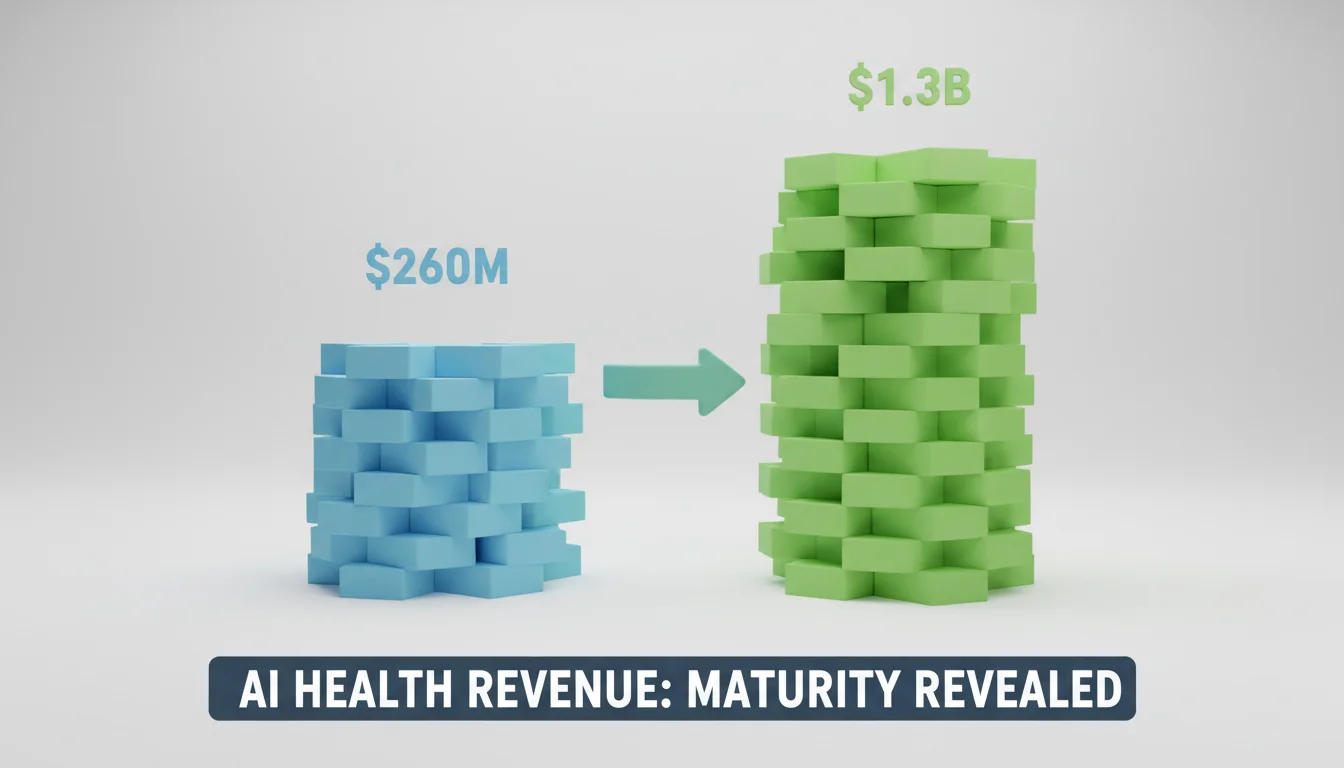
The trajectory of AI health companies from nascent startups to public market players offers a critical lens for investors assessing maturity and future growth. The question isn’t merely about capital raised, but about the revenue benchmarks achieved at scale, signaling validated product-market fit and robust enterprise adoption. Examining companies with reported revenues ranging from approximately $260 million to over $2.3 billion USD provides invaluable insights into the financial underpinnings of enduring success in a sector increasingly shaped by regulatory scrutiny and the demand for demonstrable value.
Deconstructing Revenue Milestones: Hims & Hers and Tempus AI Lead the Pack
When analyzing the fastest growing AI health companies, revenue figures serve as a potent indicator of market penetration and operational efficiency. Hims & Hers, for instance, has demonstrated remarkable public scale, achieving an impressive $2.35 billion in revenue for the full year 2025. This figure, often associated with direct-to-consumer models leveraging AI for personalized health experiences, underscores the potential for rapid expansion when consumer engagement and accessible care converge. Their growth rates, reported between 26-53% across various entities in this analysis, highlight a dynamic market. Hims & Hers investor relations revenue reports
Tempus AI, founded by Eric Lefkofsky, stands as another beacon of substantial revenue generation in the AI health landscape, reporting approximately $1.27 billion for the full year 2025. Tempus’s focus on precision medicine, leveraging AI to analyze vast amounts of clinical and molecular data, illustrates how deep enterprise contracts and deployments within healthcare systems can translate into significant financial outcomes. Their model emphasizes the depth of their AI capabilities in areas like oncology and infectious disease, driving value for providers and payers alike. This level of revenue suggests a strong foundation built on complex data integration and actionable insights, appealing to both employers and health plans seeking advanced diagnostic and therapeutic guidance. Tempus AI corporate financial statements
The Mid-Tier Momentum: Hinge Health, iRhythm Technologies, and the Power of Specialization
Moving down the revenue spectrum, companies like Hinge Health and iRhythm Technologies demonstrate robust growth within specialized niches. Hinge Health, with reported revenue of $587.9 million for the full year 2025, exemplifies the success of AI-powered digital therapeutics, particularly in musculoskeletal care. Their model, often integrated through employer and health-plan partnerships, showcases how targeted solutions addressing high-cost conditions can achieve significant scale. The depth of their enterprise contracts and the volume of covered lives they serve are critical expansion signals, indicating strong traction and validated outcomes.
iRhythm Technologies, reporting $747 million in revenue for the full year 2025, highlights the power of AI in diagnostic monitoring. Their Zio XT patch, combined with AI-driven analysis, has carved out a substantial market share in cardiac rhythm detection. The company’s ability to navigate regulatory pathways, including 510(k) clearances, and secure reimbursement further validates their growth. This revenue figure underscores that validated AI health companies, particularly those operating within well-defined regulatory frameworks, are indeed growing faster, as their solutions provide clear clinical utility and economic benefits. The “data moat” iRhythm has built through extensive ECG recordings is a significant competitive advantage. iRhythm Technologies SEC filings
Omada Health and HeartFlow: Navigating Growth and Regulatory Landscapes
Omada Health, with reported revenue of $260 million for the full year 2025, provides a compelling case study in the digital chronic disease management space. Their AI-driven programs for conditions like diabetes and hypertension are often deployed through employer and health-plan channels, demonstrating the increasing reliance on scalable digital interventions. The focus on behavior change and personalized coaching, powered by AI, resonates with payers looking for cost-effective solutions to improve population health outcomes. Their journey reflects the argument that as regulatory scrutiny increases, companies with clinically validated and integrated solutions gain a competitive edge.
HeartFlow, while not having a specific revenue figure provided in this context, is a crucial entity in understanding the landscape of AI health companies. Their AI-driven FFRCT analysis, which provides non-invasive coronary artery disease assessment, exemplifies how sophisticated AI can transform diagnostic pathways. Companies like HeartFlow, operating in highly regulated and specialized areas, often require significant investment in clinical validation and regulatory approvals. The insights from investors like Jorge Conde, who has a deep understanding of the biotech and health tech landscape, often emphasize the importance of robust clinical evidence and a clear path to reimbursement for such innovative AI applications.
The Broader Context: Public Markets and Investor Confidence
The journey from private funding rounds to public market scale, whether through Nasdaq or NYSE listings, is a testament to the maturity of these AI health companies. Organizations like Rock Health and Goldman Sachs Healthcare provide invaluable market intelligence, tracking investment trends and performance metrics that inform investor decisions. The SEC filings of publicly traded entities offer transparency into their financial health, growth strategies, and risk factors, which are critical for investors. The consistent growth rates, ranging from 26-53% across these companies, signal a sector that is not only attracting capital but also generating substantial, sustainable revenue. This momentum is further fueled by the increasing demand from employers and health plans for AI solutions that can deliver measurable improvements in patient outcomes and cost efficiencies.
Implications for Future Investment
The revenue benchmarks achieved by Hims & Hers, Tempus AI, Hinge Health, iRhythm Technologies, and Omada Health underscore a pivotal shift in the AI health sector. Companies demonstrating substantial revenue, often exceeding hundreds of millions of dollars, are those that have successfully navigated the complexities of product development, regulatory approval, and enterprise adoption. The insights from industry leaders like Eric Lefkofsky highlight the importance of foundational AI capabilities and deep market integration. For investors, these figures are not just historical data points; they are leading indicators of market validation, operational scalability, and the potential for long-term value creation. As regulatory scrutiny inevitably intensifies, companies that can demonstrate both significant revenue and robust clinical evidence will continue to attract premium valuations, solidifying their position as the fastest growing AI health companies.
Frequently Asked Questions
What revenue benchmarks indicate maturity and product-market fit for AI health companies?
The article highlights companies with reported revenues ranging from approximately $260 million to over $2.3 billion USD as indicators of maturity. These figures signal validated product-market fit and robust enterprise adoption, demonstrating enduring success in the sector.
Which AI health companies are leading in revenue generation according to the article?
Hims & Hers and Tempus AI are identified as leaders in revenue generation. Hims & Hers achieved $2.35 billion in revenue for 2025, while Tempus AI reported approximately $1.27 billion for the same year.
How do mid-tier AI health companies achieve significant revenue?
Mid-tier companies like Hinge Health ($587.9 million revenue) and iRhythm Technologies ($747 million revenue) achieve significant revenue through specialization. They focus on targeted solutions within specific niches, often integrating with employer and health-plan partnerships or operating within well-defined regulatory frameworks.
What role does regulatory scrutiny play in the success of AI health companies?
As regulatory scrutiny increases, companies with clinically validated and integrated solutions gain a competitive edge. Companies like iRhythm Technologies, with 510(k) clearances and reimbursement, demonstrate that navigating regulatory pathways is crucial for growth and economic benefits.


